
At a glance
- Grated cheese helps foodservice kitchens reduce prep time and labour by removing the need for in-house grating.
- Its consistent particle size supports even distribution during prep, resulting in predictable melt, coverage and presentation.
- Versatile formats like grated Parmesan simplify menu execution, allowing multiple applications with fewer ingredients and less complexity.
- More consistent portioning improves cost control, reduces waste and gives kitchens better visibility over usage and ordering.
Grated cheese is used across a wide range of dishes in commercial kitchens, from cooked applications to finishing at service. It appears across a wide range of menus, particularly in high-volume environments where dishes need to be prepared quickly and delivered to the same standard every time.
In these settings, ingredients are selected not just for flavour, but for how they perform during service. Small differences in preparation, handling and application can affect both speed and consistency, especially across multiple shifts and staff.
That is why grated formats have become a staple in foodservice kitchens. Their value lies in how they support day-to-day operations, helping kitchens maintain pace, consistency and control during service.
Reduces Prep Time and Frees Up Kitchen Labour
In-house cheese grating may be a minor task for operations that rarely serve cheese-based dishes. But if your kitchen repeatedly serves pizzas, pastas, burgers, baked dishes or breakfast items with cheese, repeated grating quickly becomes a drain on time and labour. It requires equipment setup, cleaning and dedicated prep windows, adding pressure to your teams.
For many operators, this extra prep work disrupts kitchen workflow, particularly during staff shortages and peak service periods. Even small inefficiencies can disrupt rhythm and delay service output.
Using grated cheese removes this process entirely. Staff are no longer tied up in repetitive prep tasks and can focus on cooking, assembly and service. Reducing prep time helps the kitchen run more smoothly, making it easier to maintain pace and minimise bottlenecks during high-demand periods.
Predictable Melt and Coverage for Consistent Cooking Performance
In commercial kitchens, cheese is often grated and applied by different staff across multiple shifts. Small variations in technique, equipment condition and block temperature can affect how evenly the cheese melts, how well it browns and the texture it delivers. This makes it harder to maintain consistent output, particularly across multiple-site operations.
Pre-grated cheese has a uniform particle size and density, which helps deliver more consistent melting and coverage during cooking. This is particularly important in finishing and light-coverage applications, where an even melt directly affects presentation and flavour balance.
This consistency reduces variation during cooking and service, helping dishes cook evenly, present well and meet the same standard regardless of who is on shift.
Over time, this reliability helps kitchens standardise output and protect menu consistency across services, locations and shifts.
Simplifies Menu Execution Across Multiple Dishes
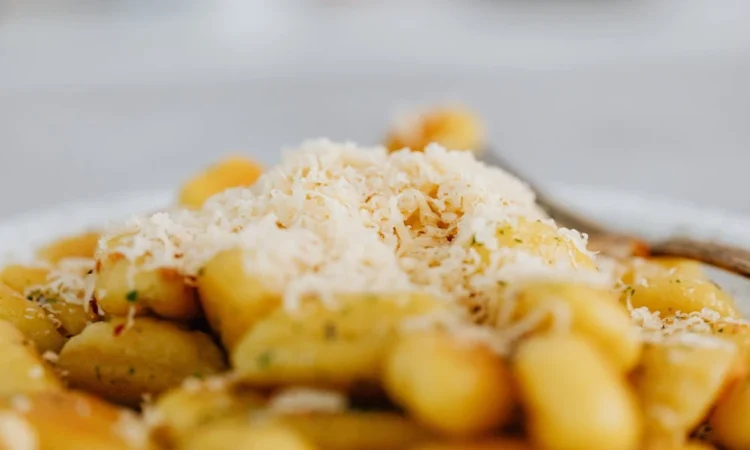
Grated cheese is highly versatile and can be used across a wide range of menu items. Grated Parmesan is a clear example. It can be used in baked dishes, grilled items, burgers and sandwiches or applied at service as a finishing layer on dishes like pasta.
This versatility allows kitchens to work with a smaller, more efficient range of cheese products. Instead of managing multiple cheese formats, operators can rely on grated cheese across different applications, which simplifies prep and service.
Using fewer cheese types and formats also reduces the number of preparation methods the kitchen needs to manage. Staff don’t need to switch between cutting, grating or portioning different cheeses for different applications, making training faster and reducing errors.
With fewer variables in how cheese is handled and applied, dishes are assembled more consistently across shifts. During peak service, this simpler setup supports faster, more accurate execution without adding extra prep or oversight.
Improved Portion Control and Cost Management
Cheese is used across many menu items, so small inconsistencies in portion sizes can significantly impact food costs. When cheese is grated in-house, variations in particle size and density can mean one scoop holds more cheese than intended.
Pre-grated cheese is produced with a consistent particle size, which helps portions stay more consistent from scoop to scoop. This makes portions easier to standardise and reduces the likelihood of over-application during busy service.
With more consistent portioning, kitchens get a clearer view of consumption patterns, which supports more accurate inventory management, reduces waste and improves ordering accuracy. Over time, this level of control contributes to stronger cost management and more stable margins, which is particularly important in high-volume foodservice operations.
Grated cheese supports faster service, more consistent output, simpler menu execution and tighter cost control without compromising quality or adding operational complexity.
By removing unnecessary prep steps and reducing variability across staff, shifts and services, kitchens can operate more consistently, even under time and margin pressure.
As service demands increase, standardised formats like grated cheese give kitchens a practical way to maintain consistency. To realise these benefits, kitchens need products with reliable quality and performance, backed by commercial-grade dairy suppliers that understand the demands of foodservice.