
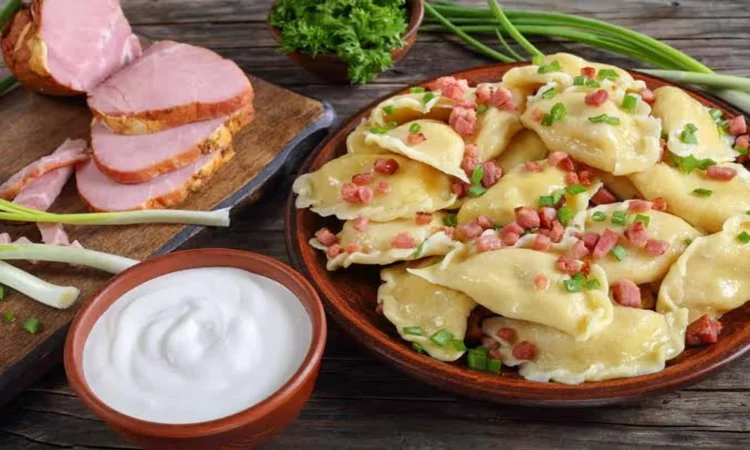
One sauce can accompany two pierogi fillings when it supports what they share without overpowering what makes them different. Begin with the two products already chosen, select a restrained base, and put stronger accents on the side. You do not need both fillings to taste alike. The shared sauce simply needs to make sense with each one.
Look for the flavors the fillings share
Write the fillings in ordinary ingredient terms. Sassy Sweet Potato contains sweet potato, potato and garlic. Sizzlin’ Fried Onion contains potato and onion. Both give you a savory potato-based starting point, while garlic and onion point in related but distinct directions. That is a more useful comparison than grouping them only because both are dumplings.
Use the descriptions available through Holy Perogy’s Cleveland store finder to establish the actual pair before planning the sauce. If the store has a different second variety, reconsider the accompaniment rather than assuming the original choice fits automatically. A shared sauce is a response to two particular fillings, not a universal answer for the entire range.
Another pairing might share cheddar instead of potato as its most noticeable theme. Plain potato-and-cheddar pierogies and a jalapeño-cheddar version offer a different comparison because one introduces pepper. The shared sauce could remain restrained while the fillings supply the contrast. Avoid adding a strong accent to the sauce that erases the reason for offering both products.
Some pairs have less in common. A mini chicken-and-onion dumpling and a sweet-potato-and-garlic pierogi may still share a table, but finding one sauce requires a more personal taste decision. Do not force a match because one bowl would be convenient. Serving the fillings with separate simple finishes, or without sauce, may be the better meal.
Choose a base that leaves both recognizable
For the sweet-potato-and-garlic and potato-and-onion pair, consider a plain yogurt dip with a little lemon and dill. Start with a small amount of the stronger ingredients so you can adjust after tasting. If the meal needs to stay plant-based, use an unsweetened plant-based yogurt whose ingredients suit the diners. A familiar vinaigrette served on the side is another possible starting point.
Think about the sauce’s main contribution. Does it bring tang, creaminess or an herb flavor? If it brings all three strongly, it may be difficult to tell which part works with each filling. Simplifying the base gives you more control. You can add an accent later, but you cannot easily remove a dominant flavor after dressing all the food.
Keep the intended meal category consistent. A sauce containing dairy changes a plate made with plant-based pierogies. That may be welcome for one diner and unsuitable for another. Check the actual sauce ingredients alongside the dumpling labels rather than assuming the shared bowl meets both people’s needs because the fillings do.
Consider texture and service as well as taste. A sauce that pools across the plate will affect both varieties at once. A dip served separately allows diners to use it selectively. If the purpose is to preserve the differences between the fillings, separate service offers a practical advantage without requiring a more complicated recipe.
Offer the strongest accents separately
Put the element most likely to divide preferences outside the common base. A peppery condiment, a pronounced herb garnish or another strong finish can be added to individual plates. This lets the shared sauce remain useful for both fillings while each diner decides how far to take the flavor.
Limit the accents to those you expect someone to use. One optional addition can provide flexibility; several can recreate the complexity you hoped to avoid by making one sauce. Ask the diners what they prefer or use what you already know about their tastes. A row of condiments should solve a real difference rather than stand in for a decision.
Explain the arrangement in ingredient language. Tell people which filling contains garlic, which contains onion and what the sauce adds. They can then try a combination knowingly. If someone has a dietary requirement, make the current package information available rather than asking them to rely only on a short spoken description.
Keep the preparation process appropriate for each product. The dumplings are frozen and uncooked, and the package directions may differ. A shared sauce does not mean the two varieties should automatically be cooked together. Preserve their identities through preparation so the differences you planned remain clear when the meal is served.
Try a small serving before dressing everything
Once the food is properly prepared, put a little sauce beside a sample of each filling. Taste them separately before deciding whether to coat a larger serving. You may discover that the sauce suits one better in a smaller amount, or that one filling is more enjoyable without it. That is useful information, not a failure of the dinner plan.
Let other diners make their own adjustment. A person who likes the sweet-potato filling’s garlic note may want less sauce than someone who prefers a stronger finish. Offering the common bowl separately accommodates both without creating a second preparation. The shared ingredient can remain shared even when the final plates differ.
Notice whether the sauce adds a bridge or simply dominates. If both fillings become difficult to distinguish, use less or keep it beside the side dish instead. You chose two varieties for a reason, whether to accommodate preferences or enjoy contrast. The sauce should support that reason rather than make the choice invisible.
Bring the restrained base to the table and leave the final accent to the diner. One sauce can connect the meal while two fillings keep their own identities, provided the people eating retain room to decide how much connection they want.